
 Login
Login
Many American children have been visited by the tooth fairy – generally envisioned as a Tinkerbell-type character who gives kids a financial reward in exchange for their baby teeth. In fact, the tooth fairy is so popular that there are two “national days” honoring her; August 22 and February 28.
According to Delta Dental’s 2025 Original Tooth Fairy Poll, the average value of a single lost tooth during the past year declined by 14% from $5.84 to $5.01. This marks one of the most significant year-over-year declines in Tooth Fairy giving since the poll’s inception.
U.S. regional ranking for the average value of a lost tooth
- South ($5.71): Overtook the West by a mere two cents to lead the U.S., and the only region to experience a year-over-year increase, up from $5.51 in 2024.
- West ($5.69): Despite surpassing the national average, the region experienced a significant 33% drop for a lost tooth, returning close to its 2021 average of $5.54.
- Northeast ($4.59): Dropped by 33% and fell below $5.00 per tooth for the first time since 2020.
- Midwest ($3.46): Continued to significantly trail the national average for a second consecutive year at under $4.00 per tooth
While the national average is around five dollars, individual state surveys show even wider gaps. Some parents report giving $0.50 per tooth, while a small percentage of pricy payouts reach up to $50.00 for a single tooth.
Highest Average: Delaware ($8.91) and Hawaii ($8.39)
Lowest Average: Iowa ($2.30) and Wyoming ($2.43)
The Tooth Rodent?
About 85% of American kids are visited by the tooth fairy. Elsewhere in the world, children expect a visit from the Tooth Rodent.
In Spanish-speaking cultures, he’s known as Ratoncito Perez or “El Raton de Los Dientes” (The Tooth Rat) or just “el Ratón.” Italian children anticipate visits from the “Topolino dei denti da latte,” (Baby Teeth Mouse). French children call him “La Petite Souris,” (Little Mouse) and he appears in French folktales as early as the 17th century.
America’s own Tooth Fairy wasn’t really fully established in the U.S until the 1940s.The very first print mention of her – in a children’s play – only dates back to 1927. She was almost put out of business in the 1960s, due to a campaign urging parents to donate kids’ teeth to science. These teeth were used in a study looking at possible links between cancer rates and the fallout produced by the detonation of the first atomic bomb, along with as the hundreds of nuclear tests conducted by the United States and the USSR between 1945 and 1963. Ultimately 85,000 teeth were collected, and were instrumental in proving that fallout raises the risk of cancer. Scientists continue to use the teeth in studies.
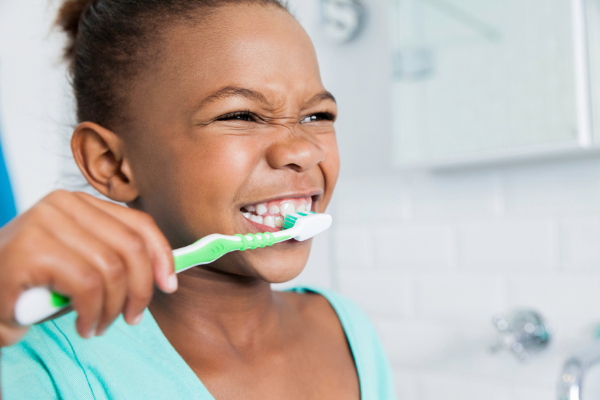
Why do we need a tooth fairy? The general consensus seems to be that a magical creature who leaves money eases what can be a scary event for a little kid. It’s also a great opportunity to teach children how to take care of their teeth properly (we all know the fairy prefers to collect clean, healthy teeth, right?)
Here are some oral health care tips for parents:
Start early: Speak to a dentist to learn how to brush a baby’s teeth. Experts recommend starting brushing as soon as the first baby tooth erupts. Make sure to use an extremely soft toothbrush (or a prewashed, soft piece of cloth) and the tiniest bit of toothpaste.
Enforce the two-minute rule: Make sure your kids know that a proper brushing requires two full minutes. There are smart toothbrushes, and apps, that provide a fun way of timing tooth brushing sessions (and keep the kids engaged and entertained).
Be gentle: Make sure that your kids know that aggressive teeth scrubbing can wear down enamel and cause gum inflammation.
Visit the dentist: Dental professionals can teach children the right way to brush and floss. And seeing the dentist and hygienist regularly is essential for preventing dental disease.
Set a good example: Kids take their cues from the adults around them. If they see parents/caretakers skipping dental visits, they’ll assume oral hygiene really isn’t that important – or that it’s just kid stuff.
If budgets are too tight to afford dental care for everyone in the family, consider joining a dental savings plans – an affordable alternative to dental insurance. These plans offer discounts on virtually all dental procedures at more than 140K dentists nationwide. Plan members report saving an average of 50%* on their dental care. Use our calculator below for a quick peek at how much you can save today.
*Discount Health Program consumer and provider surveys indicate average savings of 50%. Savings may vary by provider, location, and plan.