
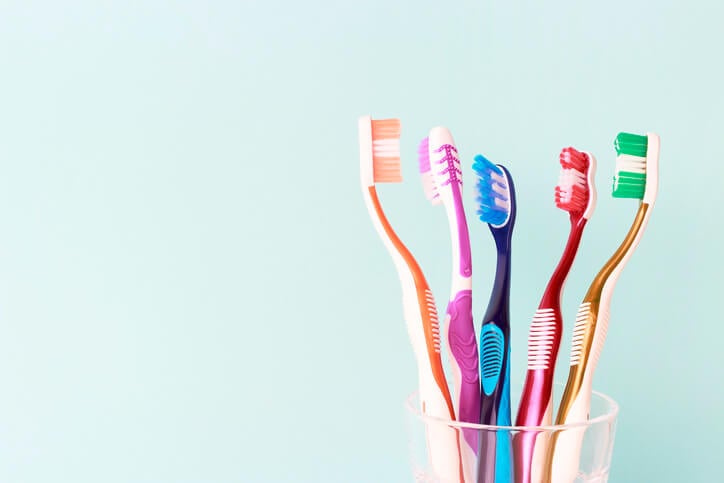
Did you know that the typical human mouth is home to over 6 billion bacteria? It’s true! Your mouth can harbor hundreds of different types of microorganisms (germs), all of which, according to the American Dental Association (ADA), can transfer to your toothbrush during use. Some are beneficial. Others are nasty and cause tooth decay, gum inflammation, and tooth loss.
Microorganisms in the environment – including mold and yeast – can also take up residence on your toothbrush. Also your toothbrush may have bacteria on it “right out of the box because they are not required to be sold in a sterile package,” says the ADA.
If you’re giving the side-eye to your toothbrush right now, the good news is that it’s typically pretty difficult to get sick from a dirty toothbrush. And following the tips below will help keep your toothbrush hygienic and able to do its one job: cleaning your teeth.
How often should I change my toothbrush?
Regularly replace toothbrushes every 3 to 4 months and do it sooner if the toothbrush owner has been sick, the bristles look worn out or your toothbrush has been on vacation with you and exposed to new sources of contamination. Same deal for the heads of electric toothbrushes – replace every four months or whenever they start looking worn-out. Even if you’re working towards reducing plastic waste, don’t hang onto your toothbrush longer. You can find ADA-approved sustainable toothbrushes (less plastic, biodegradable and/or made of renewable materials like bamboo) that can reduce waste without potentially compromising your health.
Should I clean my toothbrush?
Absolutely, but there’s no need for a complex cleaning routine. Whenever you get a new toothbrush and every time before and after you finish brushing, clean your toothbrush by rinsing it with tap water until it is completely clean. Then store your toothbrush upright in a clean, open container that allows the brush to air dry.
Choose a bottomless container – one that lets the toothbrush handle dangle in the air – rather than something like a cup if possible. A damp toothbrush dripping into a cup can create a perfect environment for mold and bacteria to grow. If you opt for a closed container, clean it out on a regular basis.
If you share toothbrush storage space, keep toothbrushes separated, and don’t let them snuggle up with each other. This can spread germs. You can, if you’re sick or recovering from an infectious illness, or if your dentist advises you to do so, rinse your brush in an antibacterial mouth rinse. But there’s no need to put your dirty toothbrush in a cup of boiling water, the dishwasher, a microwave, or use an ultraviolet device to “sanitize” the brush. You’ll probably end up damaging your toothbrush rather than disinfecting it.
See how much you can save with a dental savings plan today.
- Save an average of 50%* at the dentist
- Plans start at $7/mo billed annually
What gross things can happen if I don’t clean/change my toothbrush?
1 – Bacteria magnet
As noted above, toothbrushes can become home to bacteria from your mouth and assorted microorganisms from your environment. And the older the toothbrush, the more likely it is to be home to germs. Toothbrushes with frayed, misaligned bristles trap and retain more bacteria.
2 – Gum damage
Older toothbrushes tend to have bristles that flare out, like something big stepped on them. Damaged bristles can injure your gums, making your mouth sensitive. Old bristles may also develop sharp ends or become uneven and frayed. In the worst-case scenario, using an old, visibly damaged toothbrush for an extended period could cause gum infections.
3 – Mold in your mouth
Mold loves warm, moist places – like toothbrush bristles and (as mentioned above) the bottom of the cup or the closed container where you store your brush. You may be able to spot mold – black or brown spots, or pink slime – but mold can also be invisible to the human eye. If you notice a moldy or unpleasant odor, or see anything that might be mold, on or around your toothbrush – toss it and get yourself a new one. You might want to make a habit of always having a new toothbrush on hand, in case of emergencies.
4 – The infamous “plume” effect
Chances are you’ve heard about this: you flush the toilet and a plume of “potentially infectious aerosols” is spewed into the air, contaminating everything it touches. That’s why a bathroom toothbrush holder is the third most germ-infested place in most homes. How can you make this horror stop? Always close the toilet lid before you flush. Problem solved.
5 – Germ swap
Here’s a terrifying fact: more than one in 20 (6%) 25-35-year-olds admit they would share their toothbrush with a celebrity. Don’t do that, not with your celebrity crush, your partner, or whoever lives in your home. All sorts of oral infections and other communicable diseases can spread via toothbrush sharing. If you make a mistake and grab the wrong brush, or need to use someone else’s brush, rinse your mouth and the brush with an antibacterial mouthwash afterward (and preferably before, if possible) you use it.
Here’s some good news: a healthy mouth is less likely to be impacted by exposure to bacteria and other microorganisms as opposed to one with cavities, enamel erosion, receding gums, infections and other issues. Brushing your teeth every day is one of the simplest ways to protect your smile—but regular dental care helps make those daily habits count even more. Professional cleanings and exams catch small issues early, reinforce good brushing techniques, and support long-term oral health. If cost or coverage has ever stood in the way, dental savings plans can help make virtually all your dental care more affordable (plan members report saving an average of 50%* at the dentist) with no waiting periods and immediate access to discounts. (Curious about how much you can save with a plan? Check out the calculator below.)
*Discount Health Program consumer and provider surveys indicate average savings of 50%. Savings may vary by provider, location, and plan.